Delivery is no longer a quiet handoff at the finish line; it is a live test of your brand.
Customers expect clear promises, real-time visibility, and tracking updates that feel as polished as your storefront. When that experience gets handed to a generic carrier portal, your brand disappears at the exact moment anxiety peaks.
White-label delivery tracking reverses that pattern by keeping status pages, alerts, and ETAs inside your own environment. With CIGO Tracker, last-mile tracking solutions and logistics delivery tracking work together, so every order reinforces trust rather than creates friction.
Key Takeaways
- White-label delivery tracking reinforces your brand at every customer interaction, from tracking links to proof of delivery.
- Customers are more likely to trust branded tracking pages that live on your domain than generic third-party portals that break the journey.
- Logistics providers gain a clear edge when they control the post-checkout experience instead of handing that relationship to carriers.
- Branded last-mile tracking solutions improve satisfaction and cut WISMO contacts by pairing real-time status with proactive communication.
- CIGO Tracker offers scalable white-label tools that blend custom branding with powerful logistics delivery tracking, route intelligence, and customer notifications.
What is White-Label Delivery Tracking?
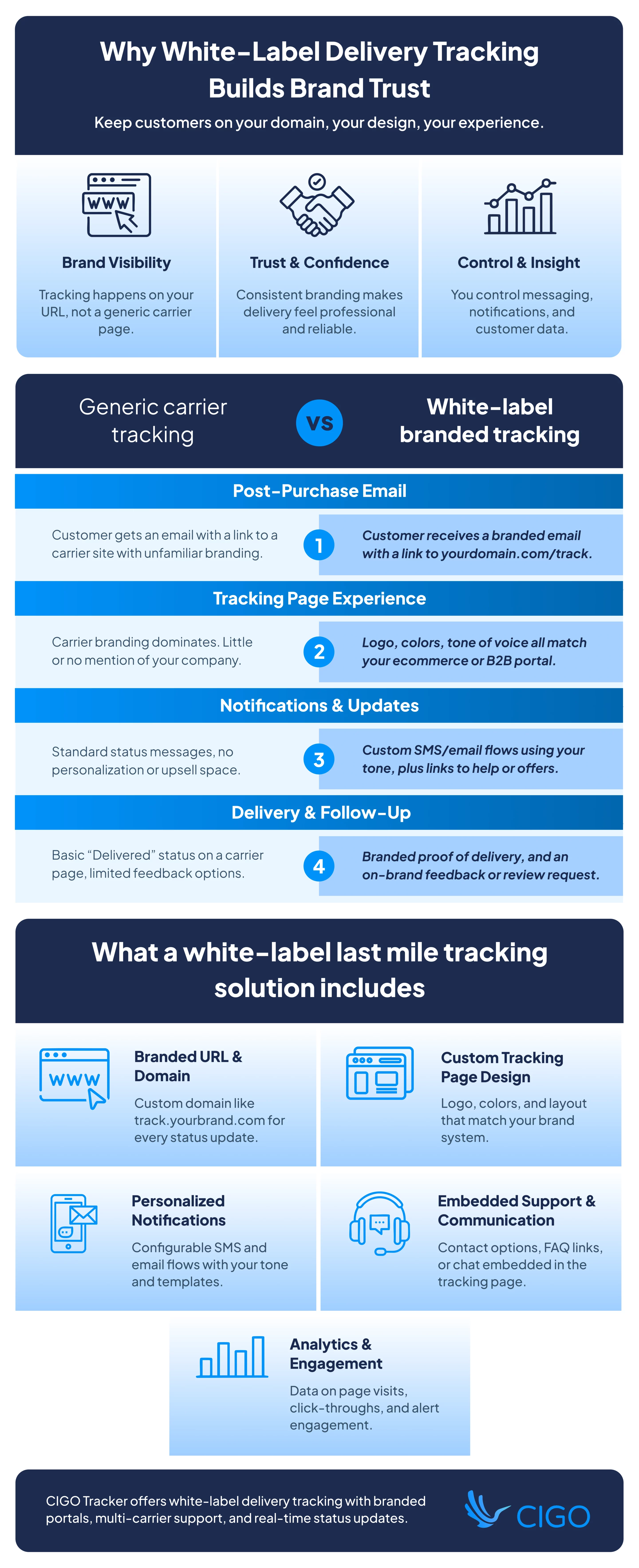
White-label delivery tracking is a model where shipment and delivery updates appear under your brand while a specialist platform handles everything in the background. Customers click a tracking link and land on a page that mirrors your site.
They see your logo, your colors, and notifications that reflect your sender name and tone.
This familiarity does more than look good. It reassures customers, makes status checks feel predictable, and keeps their attention on your brand while they wait.
Carrier-based flows send each order to a different environment.
That fragmentation is exactly what white-label last-mile tracking solutions remove for shippers, 3PLs, couriers, and ecommerce retailers that want scalable logistics delivery tracking without losing presence.
Elements of a White-Label Tracking Experience
A strong white-label tracking experience rests on a few elements.
- Custom domain and branded URL. Tracking links use your domain, which reinforces trust when customers check status.
- Branded tracking page. Layout and copy mirror your site so the experience feels familiar; as Forbes reported, consistent branding builds trust and loyalty.
- Configurable notification flows. SMS, email, and app alerts follow your promises and keep your sender name visible.
- Embedded support interface. Chat, FAQs, or contact links sit beside the timeline so people move from questions to help.
When these pieces fit together around shared data, you move from scattered handoffs to a single story your customer can follow.
Why Brand Trust Is Essential in Last-Mile Delivery
Last-mile delivery is where customers decide if they trust you. A smooth handoff shows that your promises, ETAs, and tracking updates were real. Missed windows or vague status messages chip away at that confidence.
Every order becomes another line on your brand’s mental scorecard.
PwC reports that many consumers stop buying after several bad experiences, and some leave when experiences feel inconsistent. Because last-mile touchpoints sit in an emotional part of the journey, white-label tracking helps you keep them consistent and clearly branded, rather than getting lost in a carrier’s system.
The Psychology of Branded Delivery
Trust in delivery is built from quick, almost automatic judgments.
Customers scan a page in a split second and decide whether it feels safe, familiar, and under control. Those impressions quietly shape how they experience your last-mile tracking solutions, especially in high-volume retail delivery environments.
- Recognition lowers anxiety. When someone taps a tracking link and lands on a page that looks like the rest of your site, worry drops. Familiar colors, logo, and URL tell them they are in the right place and that you still own the journey.
- Professionalism in motion. A clean timeline with clear ETAs and timely updates suggests strong operations behind the scenes. If you communicate well in motion, you probably handle exceptions well, too.
- Affinity over time. Every smooth delivery becomes another proof that your brand keeps its word. Research from Nielsen Norman describes the Net Promoter Score as a simple way to capture how likely customers are to recommend you, turning these delivery moments into a measurable loyalty signal.
Branded delivery tracking lets you shape these cues on purpose. Instead of hoping a carrier portal sends the right signals, you guide how trust grows with every order.
Challenges With Generic or Carrier-Branded Tracking

Carrier portals and off-the-shelf tracking links do move parcels, yet they often work against your brand.
Customers jump between layouts and domains, so the journey feels stitched together instead of owned. When something runs late or needs an exception, that confusion makes it easy for them to blame you.
There is also a cost you do not see. Generic tracking pages rarely offer guidance or support, so you end up surrendering screen time. Because many portals reveal only basic events, you learn little about clicks and behavior, which limits your ability to refine logistics and delivery tracking.
Benefits of White-Label Logistics Delivery Tracking
White-label logistics delivery tracking pulls status updates, ETAs, and alerts back under your brand so every touchpoint feels intentional. Here is how that plays out in practice for last-mile tracking solutions and logistics delivery tracking.
| Benefit | What it looks like in practice | Impact on operations and CX |
| Brand control | Tracking lives on your domain with your logo, colors, and tone. | Stronger recognition and higher perceived trust. |
| Fewer WISMO contacts | Clear, proactive status and delay messaging. | Lower support volume and calmer conversations. |
| Revenue and loyalty opportunities | Space for offers, upgrades, and loyalty prompts on tracking pages. | Higher repeat purchase and engagement rates. |
| Personalization at scale | Names, local ETAs, and relevant notes per recipient. | Experience feels tailored rather than generic. |
| Richer delivery insight | Unified view of clicks, visits, and events across carriers. | Better decisions about routes and communication. |
Operational Impact of White-Label Tracking
White-label tracking reshapes how your teams work, not only what customers see.
Reliable status updates calm customers and support staff alike, especially when they rely on real time data that keeps expectations aligned and promoter scores easier to improve.
Collecting feedback on your own tracking pages also gives you sharper insight into routes and delivery quality. Customers see a single branded story from label creation to proof of delivery, even when 3PLs or carriers change in the background, so operational tweaks strengthen your brand rather than unsettling it.
Key Features to Look for in a White-Label Last Mile Tracking Solution
Choosing white-label last-mile tracking solutions means looking past surface branding and checking the engine underneath. You need features that protect trust and ensure honest operations.
- Custom branding controls so you can align domains, colors, copy, and tracking URLs with your site.
- Real-time status and reliable ETAs, since Salesforce reports that inaccurate information pushes customers to switch retailers.
- Embedded communications, including chat and support links, that turn tracking pages into two-way conversations.
- Detail-rich delivery events so teams and customers see clear milestones, photos, and proof of delivery.
- Multi-carrier support and analytics that unify visits, clicks, and exceptions in one view for logistics delivery tracking.
How White-Label Tracking Enhances Customer Experience Throughout the Journey
White-label tracking lets you shape a continuous journey from purchase to doorstep.
A branded confirmation email sets expectations, links to your own tracking environment, and shows customers what kind of communication they can count on. When they open that link, they land on a mobile-ready page that aligns with your design system and displays an ETA that stays in sync with your last-mile tracking solutions.
As orders move, proactive notifications about changes or approaching deliveries keep people informed. Proof of delivery and fast feedback turn logistics delivery tracking into a clear, confident ending.
Scenario: From Confusion to Confidence
Imagine two versions of the same order.
In the generic flow, the email includes a bare carrier link that pushes customers into an unfamiliar page.
The layout feels disconnected, time windows are vague, and support options hide behind clicks. When a delay occurs, customers arrive in your queue already tense, unsure who is responsible for the problem.
In the white-label flow, the confirmation email carries your brand and points to a tracking link on your domain. A clear timeline, live ETA, and visible support path keep people informed, so disruptions feel managed rather than chaotic.
White-Labeling in B2B Logistics: Beyond Retail Use Cases
White-label tracking is well known in retail and ecommerce, yet it quietly shapes B2B logistics too. 3PLs and freight forwarders use white-label last-mile tracking solutions to give shippers and receivers one shared view, even when freight moves across several modes and carriers.
That unified story helps them build a recognizable service brand rather than get lost in carrier portals.
Field service organizations apply the same idea to technicians visiting homes, hospitals, and job sites. Branded links with clear ETAs, live locations, and focused driver tracking improve access, cut missed appointments, and make logistics delivery tracking feel like support rather than disruption.
Healthcare and pharmaceutical providers add status, identity checks, and proof of delivery so sensitive handoffs remain auditable.
As reported by Deloitte, B2B supply chains increasingly treat visibility and experience as core to value, not a side benefit.
Implementation Best Practices for White-Label Delivery Tracking
White-label tracking works best as a shared project.
- Map the journey that starts at checkout and runs through proof of delivery, and flag spots where customers leave your domain or get mixed signals so your delivery strategy stays consistent end to end.
- Pick a platform that combines accurate logistics delivery tracking with flexible branding controls.
- Walk support and operations teams through the new tracking pages so they see what customers see and use those links in conversations.
Tracking KPIs to Monitor Post-Implementation
Once your white-label setup is live, numbers tell you if it is actually reshaping the delivery experience or just adding another screen. You want a focused set of KPIs that connect customer sentiment with how your last-mile tracking solutions and teams perform day to day.
- Click-through rate on tracking pages. Higher CTRs from confirmation emails and SMS suggest customers recognize and trust your branded links rather than ignore them.
- Interaction with alerts. Opens, clicks, and replies show which notifications genuinely help people feel informed and which ones create noise that you should retire or rewrite.
- Reduction in tracking-related tickets. WISMO contacts per 100 orders should trend down as logistics delivery tracking becomes clearer and more proactive. Fewer calls here free agents to focus on genuine exceptions instead of repeating basic status updates.
- Experience-specific CSAT and NPS. Short surveys tied directly to delivery reveal whether the new tracking flow feels reliable and consistent. You can review these alongside operational data, just like you would with route optimization and your broader delivery KPIs, to spot gaps between communication and execution.
Together, these signals form a practical trust dashboard that shows how white-label tracking is shaping your last-mile operation over time.
Getting the Most from CIGO Tracker’s White-Label Capabilities
At CIGO Tracker, we treat white-label delivery tracking as a core capability within a mobile-first last-mile strategy.
Through our delivery tracking feature, you configure branded portals, custom domains, and mobile-ready layouts while the platform maintains real-time maps, ETAs, and proof of delivery.
These views rely on the same data and controls that power our last-mile management engine, so drivers, dispatchers, and customers work from a consistent source of truth. Our customer engagement tools add SMS and email updates under your brand, reinforcing trust at every tracking touchpoint.
Creating a Competitive Advantage Through Logistics Branding
Strong logistics often operate quietly in the background, yet customers feel its presence with every accurate ETA and smooth delivery. White-label tracking lets you put a visual identity on that invisible layer, so your operations work also feeds your brand memory.
Providers that compete only on speed or price can easily be replaced, especially in markets where logistics optimization is already expected.
Providers that pair reliable last-mile tracking solutions with a distinctive, calm delivery journey become harder to switch away from, particularly in B2B relationships where trust and predictability carry as much weight as rate cards.
Branded delivery tracking gives you a way to show that reliability in simple, everyday interactions. When shippers, receivers, and internal stakeholders see your brand every time a parcel moves, they start to associate your name with outcomes they value.
Future Trends in White-Label Last Mile Tracking
Customer expectations around tracking keep shifting as people move between email, SMS, apps, and lock-screen widgets.
A white-label experience has to follow them, so the status looks consistent wherever they check.
Predictive tracking and machine learning will push logistics delivery tracking from static history to early warning, with options to reschedule or reroute. ResearchGate reports that transparent communication about delays improves satisfaction, which means future white-label layers will double as engagement hubs, not just portals.
Are You Ready To Own Your Delivery Story?
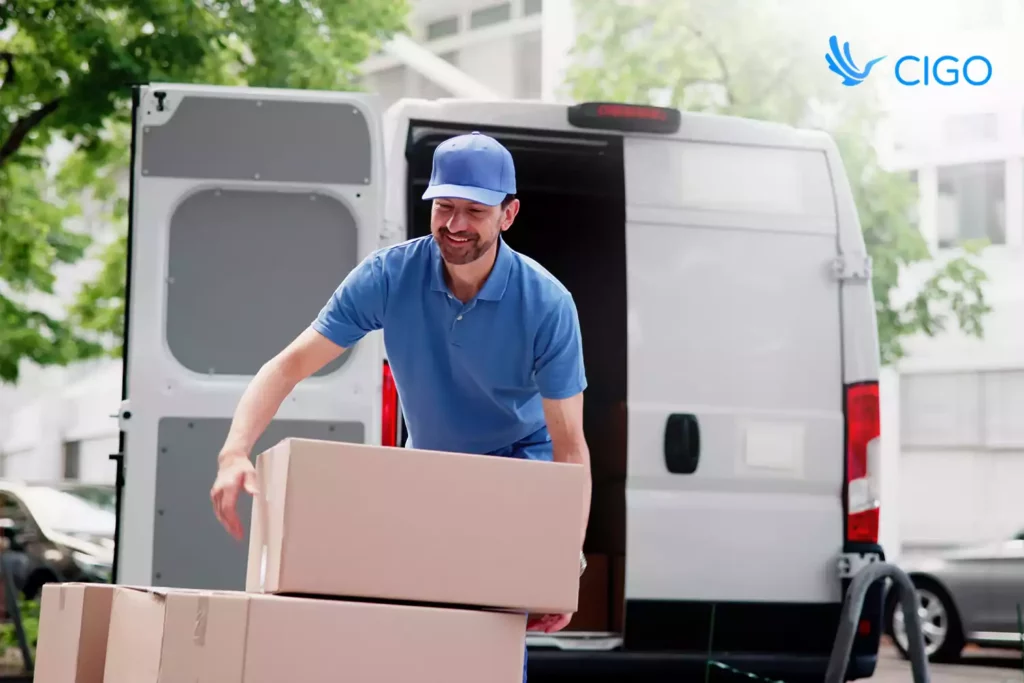
Delivery is one of the clearest tests of how you treat customers’ time and trust. White-label tracking lets you bring that experience under your brand, while our last-mile tracking solutions manage the complexity.
With CIGO Tracker, you connect routing, tracking, and proof of delivery into one story. If your flow feels fragmented, explore our delivery tracking to tighten every touchpoint.
FAQs
What are white-label last-mile tracking solutions?
White-label last-mile tracking solutions let you show delivery status on your own domain while a specialist platform handles events, ETAs, and notifications. Customers see your branding and language, so tracking feels like part of your site instead of a separate carrier tool.
How does white-label tracking reduce WISMO calls?
White-label tracking reduces WISMO by providing customers with clear status, reliable ETAs, and proactive alerts in a single, branded place. Questions shift to specific issues support can solve, which shortens calls and keeps conversations calmer for your team.
Are last-mile tracking solutions with white-label features useful for small teams?
Yes. Smaller logistics teams benefit when last-mile tracking solutions centralize routes, events, and communication without building their own platform. You keep your brand on every tracking page while our tools manage logistics, delivery tracking, proof of delivery, and customer updates in the background.
How does logistics delivery tracking help 3PLs and carriers work together?
Strong logistics delivery tracking helps shippers, 3PLs, and carriers work off the same live story. A white-label view shows events, photos, and delays under one brand, so partners coordinate around facts instead of email threads, and customers see one owner throughout the journey.
How should I choose a white-label last-mile tracking solution?
Start by listing your must-have features, such as branding control, multi-carrier support, proof of delivery, and clear analytics. Compare last-mile tracking solutions to that list and choose options that integrate with your systems so every team sees one shared picture.