< All Posts

Delivery Driver Management Software: Features, Benefits, and Top Platforms for 2025

by | May 15, 2025

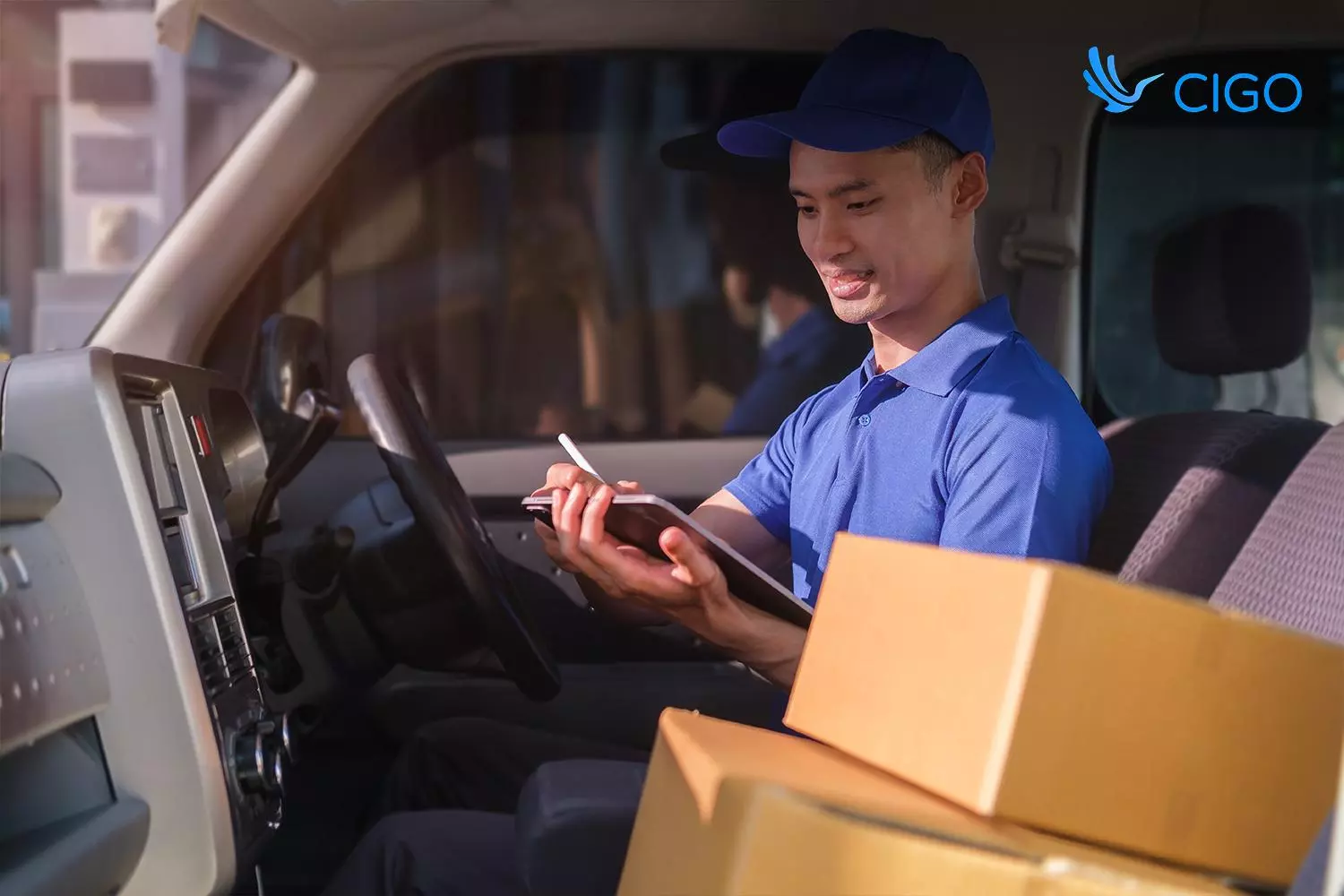
Delivery driver reviewing stop details in the driver app inside a delivery truck

Delivery driver management software is how fleet operators stop managing delivery exceptions by phone and start managing them from a single dashboard. It centralizes route planning, dispatch, driver communication, live vehicle tracking, and proof of delivery into one system, so the person answering a customer’s “where is my order” call is looking at the same stop record the driver is.

That matters more in 2025 than it did even two years ago. Delivery volumes keep rising, customers now expect a tracked window rather than a delivery day, and driver turnover means execution quality varies from shift to shift unless the process is enforced by software rather than habit.

This guide covers what delivery driver management software does, the features that separate serious platforms from basic GPS tools, the benefits you can expect, the leading options available in 2025, and how to choose between them.

What software? 

Delivery driver management software. 

It’s your game-changing solution, whether your business is enterprise-level or a small start-up. The software helps make sure you’re bringing in money instead of throwing it away. 

With the right system, you’ll get: 

  • Real-time visibility
  • Operational efficiency 
  • A seamless customer experience 

What more could you ask for? 
In this article, we’ll explore delivery driver management software. We’re looking at what it is andwhy it’s vital in 2025. We’ll also cover core features, key benefits, and how to choose the right solution for you. 

Key Takeaways

  1. Delivery driver management software is essential for optimizing modern logistics because it helps businesses improve efficiency, reduce costs, and meet rising customer expectations for speed and transparency.
  2. Features like real-time GPS tracking, route optimization, and driver performance monitoring enable better decision-making, improved accountability, and scalable operations across industries.
  3. To choose the right software, like Cigo Tracker, you have to consider business size, usability, integration needs, and support, with a focus on tools that align with your specific delivery volume and growth plans.

Delivery Driver Management Software Defined

Okay, so what is it? Delivery driver management software is a digital platform that helps businesses with driver activities that range from: 

  • Management 
  • Monitoring
  • Optimization 

Even better, it centralizes operations like route planning and driver dispatch. It even unifies communication, vehicle tracking, and performance analysis. 

Platforms like these are particularly useful for: 

  • Logistics companies
  • Food delivery services
  • eCommerce brands
  • Any business that relies on timely delivery

The bottom line is last-mile delivery is on the rise and customer expectations are growing. Add to that the need for speed and transparency, and it’s obvious. These tools just aren’t an option anymore.

Now, they’re essential.

Why Is Delivery Driver Management Important in 2025?

We’ve seen a wealth of trends that have made delivery driver management software critical to modern logistics.

Here are just a few:

  • Skyrocketing eCommerce

    The growth of online shopping has increased the pressure on delivery fleets to be faster and more reliable. What changed is not just volume but expectation: a customer who orders on Tuesday now assumes a Wednesday or Thursday arrival with a tracked window, not a five-day estimate. That compresses planning time and leaves less room to absorb a late route. For operations still assigning stops manually each morning, the gap between what was promised at checkout and what dispatch can actually execute widens with every additional order. Software closes that gap by making the promise and the plan the same object.
  • Gig Economy Expansion

    Companies using a mix of full-time and contract drivers need tools to manage diverse and dynamic fleets. A permanent driver learns a territory over months; a contract driver may run it once. That difference shows up directly in stop-level execution — access instructions, gate codes, and preferred drop locations that a veteran carries in their head are invisible to a first-time driver unless the platform surfaces them at the stop. Mixed fleets also complicate scheduling, since availability changes daily rather than weekly. Platforms that handle both employment models in one dispatch view prevent the operation from splitting into two parallel processes.
  • Customer Expectations

    Real-time tracking, delivery windows, and instant support have become the norm rather than a differentiator. Live ETAs and branded tracking are now standard across enterprise last-mile platforms, which means a customer comparing your delivery experience to their last order is comparing you to a competitor who already offers it. The operational consequence is that any gap in visibility converts directly into support volume: when a customer cannot see where their order is, they call. Meeting the expectation is cheaper than absorbing the calls that come from missing it.
  • Sustainability Initiatives

    Efficient route planning and reduced idling time can help cut emissions, and increasingly that data has to be reportable rather than merely achieved. Enterprise procurement teams now request emissions figures during vendor evaluation, and operations that cannot produce route-level data are excluded before the conversation reaches price. Beyond compliance, the operational and environmental incentives point the same direction — fewer miles driven is both lower fuel spend and lower emissions. Platforms that log distance, idle time, and stop density by route give you the numbers without a separate reporting exercise.
  • Labor Shortages

    Skilled drivers are in short supply, so optimizing the performance of every team member is more important than ever. Large truckload carriers report annual driver turnover rates of 90 to 95 percent, and 35 percent of newly hired drivers quit within their first 90 days. For a delivery operation, that churn rate means the average driver on any given route may have been with you for months, not years. Institutional knowledge does not accumulate under those conditions — it resets. Software that encodes route knowledge, stop instructions, and exception protocols into the system rather than the individual is what keeps execution consistent when the roster does not hold still.

It’s long past time for companies to embrace technology in order to remain competitive. And yes, off course, delivery driver management software is at the center of that transformation.

Key Features to Look For

Of course, not all software solutions are created equal. So what should you look for when you’re perusing the market? 

A solid delivery driver management platform will offer you the following features:

  1. Real-Time GPS Tracking

    You can track your drivers’ exact location to keep them on route, efficient, and arriving on time. Tracking in this way helps you prevent your drivers from making unapproved stops or unnecessary delays. It also helps you quickly clear up customer issues. Dispatchers can always provide accurate updates instantly.

  2. Route Optimization

    This feature lets you assign the fastest, most fuel-efficient routes automatically. Assignments will be based on traffic, weather, and delivery priority. That way, you’ll reduce delivery times and fuel costs. Smart optimization also enables dynamic rerouting when you do have unexpected delays. Don’t let road closures or last-minute order changes throw your whole day out of whack.

  3. Driver Scheduling & Dispatch

    Delivery tracking is perhaps the most critical feature. A scheduling and dispatch option means you’re free to assign tasks and shifts at your leisure. And you can do it all while managing a hybrid fleet of full-time, part-time, and gig workers. The most advanced platforms will even let you maximize efficiency by automating scheduling.

    It will be looking at driver’s:

    • Availability
    • Location
    • Historical performance
  4. Mobile Driver App

    Imagine how nice it will be to give drivers the tools they need, when they need them, on the road. You can get them helpful route details and customer information, so they can do their jobs better. Drivers can access barcode scanning, proof of delivery, and real-time updates to be at the top of their game.

    A well-designed app:

    • Boosts driver productivity
    • Reduces manual errors
    • Simplifies communication with the back office
  5. Customer Notifications

    The notifications feature lets you keep customers informed. Your customers will be thrilled to get real-time ETA updates, alerts, and delivery confirmations. You’ll be improving transparency, and, as a natural byproduct, increasing customer satisfaction. SMS and email notifications with tracking links also reduce customer support inquiries. It’s a surefire way to build trust.

  6. Performance Monitoring

    Being able to monitor driver performance is key. You can track fundamental metrics like on-time delivery rates, idle time, and customer ratings. This way, you can identify top performers and areas for improvement. Over time, the data can guide training programs, incentive structures, and workforce planning.

  7. Compliance & Safety Tools

    Who doesn’t want tools to help maintain compliance with regulations like HOS (Hours of Service)? It makes your job, and by extension your life, that much easier. You’ll also be able to monitor driver behavior and trigger alerts for unsafe practices.

    You’ll get a heads up every time your drivers are speeding or harsh braking. Some platforms even include DVIR (Driver Vehicle Inspection Reports). You can also opt for accident reporting modules for added safety governance.

  8. Integration Capabilities

    Integration is so helpful when you’re managing a bunch of apps. Integration lets you connect with your existing systems. These can include anything from CRM and warehouse management systems to eCommerce platforms.

    Robust API access and pre-built integrations will make it easier to sync data across departments. Then, you can automate routine tasks like order assignment or inventory updates.

Benefits of Delivery Driver Management Software

When you invest in delivery driver management software, you’re doing so much more than digitizing logistics.You’re transforming your entire delivery operation from top to bottom. The difference you’ll see is a machine that is streamlined, scalable, and focused on your customer. You’ll be reducing operational headaches and improving both driver accountability and customer satisfaction. The benefits are endless.

Truly, the right software delivers measurable ROI across every facet of your business. 

Below are some of the benefits you can expect to experience:

  1. Increased Operational Efficiency

    Let’s face it: manual dispatching and routing are time-consuming and rife with human error. Automation lets you make faster decisions, fewer mistakes, and produce a higher output — and pairing it with fleet-wide route optimization means the gains compound across every vehicle rather than one route at a time.

  2. Lower Fuel and Maintenance Costs

    When you optimize routes and monitor driving behavior, you can cut fuel consumption. You’ll also get a noticeable reduction in wear and tear on your vehicles.

  3. Higher Driver Accountability

    With real-time tracking and performance analytics, you can keep tabs on your drivers’ productivity. Basically, you can hold your drivers accountable without being an annoying micromanager.

  4. Improved Customer Experience

    The software enables real-time notifications, accurate ETAs, and smoother deliveries. And all of these contribute to better reviews and repeat business.

  5. Scalability

    As your business grows, manual systems break down. Delivery driver management software can scale from 5 to 500+ drivers without a hitch.

  6. Better Compliance and Safety

    Track driving behavior, mandate breaks, and store logs to ensure compliance with transportation regulations. This means minimizing legal risk.

Use Cases Across Industries

While delivery driver management software is often associated with traditional logistics, it benefits a wide range of industries:

  • Retail & eCommerce

    Automates delivery scheduling and reduces order-to-door times.
  • Food & Beverage

    Ensures hot and fresh delivery with time-sensitive routing.
  • Healthcare & Pharmaceuticals

    Enables secure and timely delivery of sensitive medical supplies.
  • Courier & Parcel Services

    Increases route density and reduces the cost per delivery.
  • Construction & Maintenance

    Tracks equipment delivery and technician dispatch.

How to Choose the Right Delivery Driver Management Software

There’s no one-size-fits-all solution. When evaluating your options, consider the following:

  1. Business Size and Delivery Volume

    A startup with five drivers needs a tool different from a national carrier with hundreds. Choose software that aligns with your scale and can grow with you.

  2. Ease of Use

    Driver adoption is key. Look for platforms with intuitive interfaces, mobile compatibility, and minimal training requirements.

  3. Customization Options

    Can you tailor notifications, performance metrics, or scheduling rules to your needs? Flexibility is critical for competitive differentiation.

  4. Pricing Structure

    Some tools charge per driver. Others might charge for each delivery. Ask about the pricing model to make sure it’s good for your business margins.

  5. Customer Support

    Reliable tech support and onboarding services can take your business from stressful to smooth. Make sure you’re getting the support you need.

  6. Security and Data Privacy

    Make sure whatever software you choose complies with industry standards for data encryption, customer privacy, and GDPR or HIPAA, if you need them.

Top Delivery Driver Management Software in 2025

Here are a few leading platforms businesses are using to streamline their delivery operations

  • Cigo Tracker

    CIGO Tracker is a cloud-based delivery driver management platform that unifies route planning, dispatch, live tracking, driver communication, and proof of delivery in a single workflow. The design principle is that every stop should have one record — planned, executed, and closed — visible identically to dispatch, the driver, and the support agent fielding the customer call. Operations that run routing in one tool, tracking in another, and proof of delivery on paper spend a measurable share of every day reconciling those three views. CIGO Tracker removes that reconciliation step.

    Route planning and dispatch. Constraint-based optimization handles time windows, vehicle capacity, service time per stop, and driver skill requirements before a route reaches a driver, rather than sequencing stops by distance alone. Dispatch can insert, resequence, or reassign stops mid-route without losing the audit trail of what actually happened, which keeps the day’s record clean even when the day does not go to plan.

    Driver execution. The mobile app gives drivers stop-level context before arrival: access instructions, gate codes, delivery preferences, and required completion steps. Proof of delivery capture covers photos, signatures, GPS coordinates, and timestamps, with required fields configurable per stop type so proof quality does not vary by who is on shift.

    Customer communication. Branded tracking pages, automated ETA notifications, and two-way SMS keep recipients informed without adding support headcount. Cigo Bridge provides business caller ID and call recording so driver-to-customer contact stays professional and documented.

    Best suited for: Delivery operations that want routing, driver management, proof of delivery, and customer communication in one platform rather than stitching together separate tools, and teams that need fast deployment without a lengthy configuration project.

    What sets it apart: Published, predictable pricing in a category where most platforms quote by custom contract, plus a unified stop record rather than integrated modules.

    Starting price: $290 per month for the Starter plan, with no per-stop fees. A 14-day free trial is available.

  • Onfleet

    Onfleet is popular for its clean interface and strong customer communication tools, with real-time SMS updates, driver ETA tracking, and customizable workflows.

    Best suited for: Local delivery businesses and last-mile couriers where the customer-facing experience is the competitive differentiator.

    What sets it apart: Task-based pricing rather than per-driver, which suits operations with variable headcount but steady volume.

    Starting price: $599/month for the Launch plan, including roughly 2,500 delivery or pickup tasks. Overage fees apply per task beyond the plan allowance, and SMS charges are billed separately.

  • Samsara

    Samsara offers real-time fleet tracking, safety monitoring, and analytics, with dashcams, driver behavior monitoring, and ELD integration for HOS compliance.

    Best suited for: Larger fleets where regulatory compliance and safety governance are primary drivers rather than delivery experience.

    What sets it apart: Hardware-based telematics — Samsara is a fleet safety platform first and a delivery platform second, which is a strength if compliance is your bottleneck and overhead if it isn’t.

    Starting price: Approximately $27 to $33 per vehicle per month for GPS telematics, rising to $40 to $60 with AI dashcams, based on third-party analysis. A 36-month minimum contract applies.

  • WorkWave Route Manager

    WorkWave supports dynamic routing, customer notifications, and mobile access, making it suitable for high-volume multi-stop deliveries.

    Best suited for: Companies automating dispatch for the first time and scaling from manual planning.

    What sets it apart: Route simulation, which lets planners model a route change before committing drivers to it.

    Starting price: Around $54 per month for the entry tier. Higher tiers are quoted directly.

  • Bringg

    Bringg connects internal systems with third-party logistics providers, making it a strong fit for retailers with complex supply chains.

    Best suited for: Enterprises orchestrating multiple fleets and carrier partners rather than running a single owned fleet.

    What sets it apart: Carrier network breadth — Bringg integrates with a large roster of delivery partners, which matters when capacity shifts between owned and contracted fleets.

    Starting price: Custom quote. Bringg does not publish pricing; cost is structured as a modular platform fee with volume-based adjustments.

Look, all these platforms have strengths, so take the time to make your comparisons. Check out features, scalability, and support options carefully before committing to a solution. And remember, a free trial or demo can help you test out an app implementing it throughout your company.

Common Pitfalls to Avoid

As with any software investment, there are risks. Watch out for these common mistakes:

  • Overbuying Features

    The most common budget mistake is purchasing an enterprise tier for a mid-market problem. Vendors price by module, and modules that go unused still appear on the invoice every month. Before evaluating platforms, list the three problems you actually need solved this year, then treat anything outside that list as a future consideration rather than a requirement. It is far easier to add a module in month twelve than to justify a tier you never grew into.
  • Skipping Training

    Drivers and dispatchers who do not trust a new tool will route around it, keeping a parallel process alive on paper or by phone. When that happens, the data in the platform becomes incomplete, which makes the reporting useless, which confirms everyone’s suspicion that the tool was not worth adopting. Break the cycle by training dispatch first and drivers second, and by keeping the driver workflow minimal in week one. Add required fields only after the basic stop workflow is habitual.
  • Lack of KPI Tracking:

    Without a baseline measured before go-live, you cannot demonstrate improvement afterward — and a rollout that cannot prove its value is the first line item cut in the next budget cycle. Capture on-time rate, first-attempt success, and average stops per driver per day for at least two weeks before the platform goes live. Those three numbers are enough to tell the story later.

  • Ignoring Driver Feedback:

    Drivers are the end users, and they encounter friction that never surfaces in a dispatch dashboard: a proof-of-delivery step that takes too long at the door, a required field that does not apply to their stop type, an app screen that is unreadable in direct sunlight. Collect that feedback structurally in the first month rather than waiting for adoption to quietly decline. The fixes are usually small, and the goodwill from acting on them is not.
  • Underestimating data cleanup:

    This is the mistake that most often turns a two-week rollout into a two-month one. Address data that was good enough for a human driver who knew the territory is not good enough for an optimization engine — malformed addresses, missing unit numbers, and outdated access instructions all degrade route quality immediately. Clean the address file before go-live, not after the first week of bad routes.

How to Measure ROI in the First 90 Days

Delivery driver management software pays for itself in operational savings rather than in a single visible line item, which makes ROI easy to feel and hard to prove. A structured 90-day measurement plan solves that, and it needs to start before the platform goes live:

  • Establish your baseline before go-live:

    Spend two weeks capturing your current numbers manually if necessary. You need six figures: on-time delivery rate, first-attempt success rate, average stops completed per driver per day, average fuel cost per route, inbound support contacts related to delivery status, and the hours dispatch spends building routes each morning. None of these require sophisticated tooling to measure, and all six are the numbers your finance team will ask about later.

  • Days 1 to 30: adoption, not outcomes:

    Drivers and dispatchers who do not trust a new tool will route around it, keeping a parallel process alive on paper or by phone. When that happens, the data in the platform becomes incomplete, which makes the reporting useless, which confirms everyone’s suspicion that the tool was not worth adopting. Break the cycle by training dispatch first and drivers second, and by keeping the driver workflow minimal in week one. Add required fields only after the basic stop workflow is habitual.
  • Days 31 to 60: operational metrics stabilize:

    By the second month, route quality and driver behavior are consistent enough to read. Compare stops per driver per day and on-time rate against your baseline. First-attempt success is typically the fastest mover, because giving drivers access instructions and delivery preferences at the stop addresses a failure mode that has an immediate fix. Fuel and mileage improvements follow route optimization but take longer to show clearly, since they are sensitive to seasonal volume.

  • Days 61 to 90: financial impact:

    Drivers are the end users, and they encounter friction that never surfaces in a dispatch dashboard: a proof-of-delivery step that takes too long at the door, a required field that does not apply to their stop type, an app screen that is unreadable in direct sunlight. Collect that feedback structurally in the first month rather than waiting for adoption to quietly decline. The fixes are usually small, and the goodwill from acting on them is not.
  • What good looks like at 90 days:

    Benchmarks vary by delivery model, but a healthy rollout typically shows on-time rate improving by double digits, first-attempt success up by several points, proof of delivery completion above 95 percent, and delivery-status support contacts materially down. If proof of delivery completion is still below 90 percent at day 90, the issue is adoption rather than software, and the fix is workflow simplification rather than a platform change.

Book a Demo with Cigo Tracker Today

Customer expectations are growing and delivery networks are becoming more complex. As such, delivery driver management software is a mission-critical tool for businesses of all sizes. 

It offers the automation, visibility, and control needed to run efficient, customer-centric delivery operations. 

You’ll want to invest in the right solution so you can improve your company’s performance, cut costs, and genuinely delight your customers. 

Most importantly, this software can set your company apart in a crowded marketplace. Whether you’re managing five drivers or five hundred, now is the time to upgrade your logistics with intelligent driver management technology.

Ready to take control of your delivery operations?

Cigo Tracker makes it easy to streamline routes, track drivers in real time, and keep customers informed every step of the way. Designed for businesses that need efficiency without complexity, Cigo Tracker offers fast setup, powerful tools. 

We also provide a clean, user-friendly interface. 

Whether you’re scaling up or fine-tuning your existing fleet, Cigo helps you deliver on time every time.Book a demo with Cigo Tracker today and see how smarter delivery management can transform your business.



FAQs

What is delivery driver management software, and who should use it?

Delivery driver management software is a digital tool that helps businesses track, manage, and optimize delivery operations. It’s ideal for companies in logistics, eCommerce, food delivery, healthcare, and any service that relies on timely, efficient deliveries.

How does delivery driver management software improve efficiency?

It automates key tasks like route planning, dispatching, and driver communication while offering real-time tracking and analytics. This reduces manual errors, shortens delivery times, and cuts operational costs.

Can the software integrate with my existing tools like CRM or inventory systems?

Yes, most modern solutions offer integrations with CRMs, warehouse management systems, eCommerce platforms, and accounting tools to streamline workflows and ensure data consistency.

Is it suitable for small businesses or only large fleets?

Delivery driver management software is scalable. Many platforms offer plans tailored to small businesses with just a few drivers, while also supporting large enterprises with complex logistics needs.

How much does delivery driver management software cost?

Pricing typically follows one of three models: per driver or per vehicle per month, per delivery or task completed, or a flat platform fee by tier. Entry-level platforms start around $50 to $60 per month for small fleets, mid-market platforms with full tracking and proof of delivery generally run $290 to $600 per month, and enterprise orchestration platforms price by custom quote and commonly reach five or six figures annually. Watch for costs outside the headline figure: per-task overage fees, SMS charges billed separately, implementation and onboarding fees, and minimum contract terms. Know your monthly stop volume and required modules before any vendor conversation, since both are the primary levers vendors price against.

What features should I look for in delivery driver management software?

Prioritize five capabilities. Constraint-based route optimization that accounts for time windows, capacity, and service time rather than distance alone. Real-time dispatch controls that let you resequence or reassign mid-route without losing the stop record. A driver mobile app that surfaces stop-level context like access instructions and delivery preferences. Proof of delivery capture covering photos, signatures, GPS, and timestamps with required fields per stop type. And integrations with your existing OMS, WMS, or ERP, since ETA accuracy breaks down the moment those systems disagree on stop status. Everything else is refinement on top of those five.

How does delivery driver management software improve on-time delivery?

It improves on-time performance at three points in the day. Before dispatch, constraint-based planning builds routes that account for real service times and time windows, so the plan is achievable rather than theoretically optimal. During execution, live route monitoring surfaces which routes are running behind while options still exist, letting dispatch resequence or reassign before a delay cascades through every subsequent stop. At the stop, giving drivers access instructions and delivery preferences in advance raises first-attempt success, which removes the reattempts that consume the next day’s capacity. Operations typically see the largest gains in the first 90 days, as routing accuracy and driver adoption stabilize together.


Teresa Garcia

Teresa Artelle Garcia is a highly organized and action-oriented Sales Development Representative at Cigo Tracker. With a strong academic background in International Development and Globalization, Teresa brings a unique perspective to her role in helping clients streamline their delivery operations. Her experience in customer service, sales, and stakeholder management allows her to connect with clients and understand their needs efficiently. Teresa is known for her ability to communicate effectively, manage complex projects, and lead with integrity, making her a valuable asset to the Cigo Tracker team.

Try Cigo Tracker

Route optimization is a game-changer for logistics operations, providing numerous benefits that enhance.

Recent Posts