 Foresight AI
A delivery route planner app does more than map a route. It accounts for traffic, time windows, vehicle capacity, and driver schedules, then recalculates mid-day when conditions change. That distinction matters for fleet operators, because a route that looked achievable at 7am is the one running forty minutes behind by mid-morning, and a static plan has no way to recover it.
This leaves drivers stuck in traffic, burning extra fuel, and frustrating customers with late arrivals. These inefficiencies don’t just eat into profits. They also erode customer trust and make it harder to scale operations smoothly.
In short, a delivery route planner app is crucial for businesses to streamline their operations. Route planning software offers features like real-time tracking and automated adjustments.
This ensures an optimized route for every delivery. With capabilities to handle unlimited routes, these apps significantly enhance efficiency and reduce costs. This makes route optimization software indispensable for managing delivery routes effectively.
Key Takeaways
- Route planner apps save time and money by optimizing delivery sequences, reducing idle time, and avoiding traffic.
- Customer satisfaction improves with real-time updates and features like live driver tracking, instant ETAs, and proof of delivery to keep customers informed and build trust.
- The best apps scale with your business, whether you’re managing a handful of deliveries or thousands, because tools like Cigo Tracker, Onfleet, and OptimoRoute offer scalable solutions with features like unlimited stops, analytics, and mobile integration.
What Are Delivery Route Planner Apps?
A delivery route planner app is software that sequences multiple delivery stops into an efficient route and manages that route through the delivery day. The distinction from consumer navigation is that a route planner solves for the whole day rather than the next turn: given fifty stops, three vehicles, and a set of time windows, it determines which driver takes which stops in which order.
The planning problem itself is constraint-based. A usable route has to respect delivery time windows, realistic service time at each stop, vehicle capacity, driver shift length and break requirements, and any skill or equipment rules that limit which driver can handle which delivery. Apps that ignore these constraints produce routes that look efficient on a map and break down in execution.
The second half of the job is execution. Once drivers are on the road, the app tracks progress against plan, pushes live ETAs to customers, captures proof of delivery at each stop, and lets dispatch resequence or reassign when something changes. For fleet operators, that execution layer is usually where the return comes from, because a plan that cannot adapt mid-day is only as good as the assumptions it was built on at seven in the morning.
Importance of Efficient Route Planning in Fleet Management
Efficient route planning is crucial for fleet management. This is because it directly impacts operational efficiency and cost-effectiveness. Utilizing a route planner app enables businesses to optimize delivery routes. This ensures that drivers follow the most efficient paths.
It reduces fuel costs and minimizes delivery times, leading to improved customer satisfaction.
Advanced route planning software like Cigo Tracker integrates with existing systems. It also provides real-time updates. This makes it easier to manage multiple deliveries and handle unlimited routes efficiently. Businesses can significantly enhance their fleet performance and overall productivity. They do this by optimizing each delivery route.
Key Features to Look For
When choosing a route planner app, several key features ensure optimal performance. A mobile route planner app is essential for real-time access and updates on the go. Efficient delivery route planning optimizes delivery routes. This ensures the most efficient routes are followed.
Look for features that handle multiple routes simultaneously. This provides optimized routes for multi stop delivery routes. Additionally, tracking route progress and optimizing delivery routes are crucial. They help maintain efficiency and meet delivery targets.
Real-Time Tracking and Updates
Real-time tracking is a crucial feature for any delivery planner app. It allows businesses to monitor delivery drivers’ locations. You can also check their progress along the delivery routes.
Apps like Cigo Tracker provide instant updates. This ensures that any delays or changes can be managed effectively. This feature is vital for maintaining efficient routes and optimizing delivery schedules. It ultimately enhances customer satisfaction and operational efficiency.
Automated Route Optimization
Automated route optimization ensures that delivery drivers apps follow the most efficient routes. This feature uses advanced algorithms to calculate the fastest route for multiple stops.
This takes into account factors like traffic conditions and delivery priorities. By automating the process, apps can handle multiple routes simultaneously. This provides optimized routes that can save time and reduce fuel consumption.
Integration with Mobile Platforms
A mobile route planner app is essential for modern delivery operations. Integration with mobile platforms ensures that delivery drivers can access route plans and updates on the go.
This feature allows for flexibility and adaptability. It enables drivers to respond to changes in real-time and maintain efficient routes.
Handling Multiple Routes and Stops
Efficiently managing multiple routes and stops is a key capability of a top-tier route planner app. This feature is particularly beneficial for businesses with high volumes of deliveries. It simplifies the process of route planning and helps in optimizing delivery routes.
Detailed Route Progress and Analytics
Tracking route progress and analyzing delivery performance are essential for continuous improvement. A comprehensive route planner app provides detailed insights into route progress. This helps businesses identify areas for improvement.
Features like route analytics and performance reports help businesses optimize delivery routes further. This ensures that the most efficient routes are always followed.
Top Best Delivery Route Planner App: Top 5
Selecting the right delivery route planner app is crucial for efficiency and cost savings. The top apps offer a free trial or free version to explore features like speedy route calculation and unlimited stops. This helps delivery drivers save time. These apps provide optimized routes. These are based on real-time data to avoid traffic and ensure the fastest routes. Their critical features enhance delivery accuracy.
5. Spoke (formerly Circuit Route Planner)
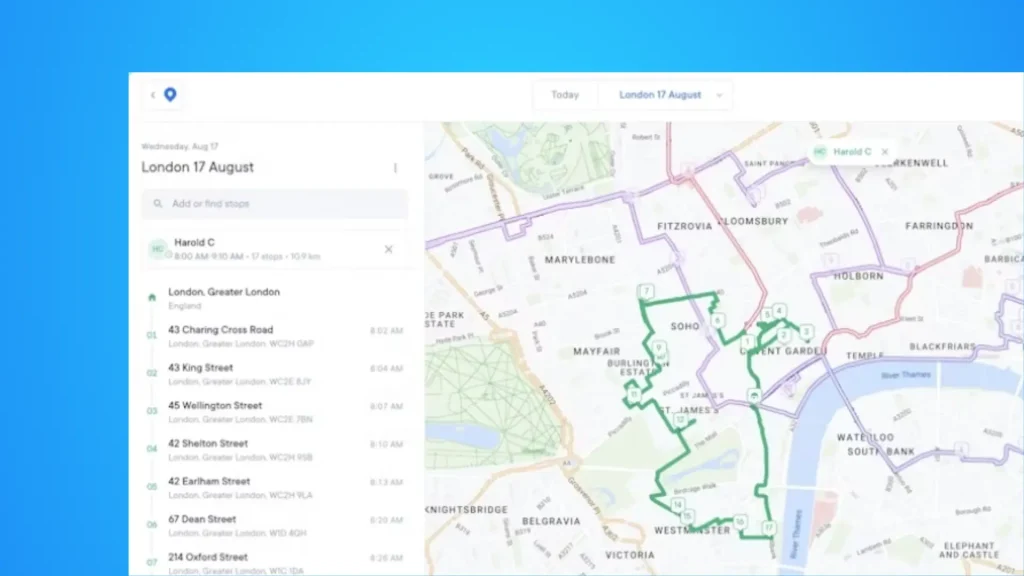
Spoke, which traded as Circuit until its rebrand, is the most driver-friendly option on this list. The mobile experience is genuinely well-built: stops import quickly, resequencing is fast, and the app is designed around a driver holding a phone rather than a dispatcher at a desk. For a small operation where the person planning the route is also the person driving it, that focus is a real advantage.
Distinctive for fleet use:
the lowest barrier to adoption of any app here. Drivers can be productive in under an hour with no training.
Limitation:
the individual product is built for solo drivers, and multi-driver dispatch requires the separate Teams tiers, which price considerably higher. The free tier caps at 10 stops per route, which most delivery operations exceed before mid-morning. Proof of delivery, customer notifications, and dispatch management are not available on the individual plans at any price.
Pricing:
Free (10 stops per route), Lite $10/month, Standard $20/month for individual drivers. Teams tiers start at $100/month for 500 stops and scale to $750/month.
4. Onfleet
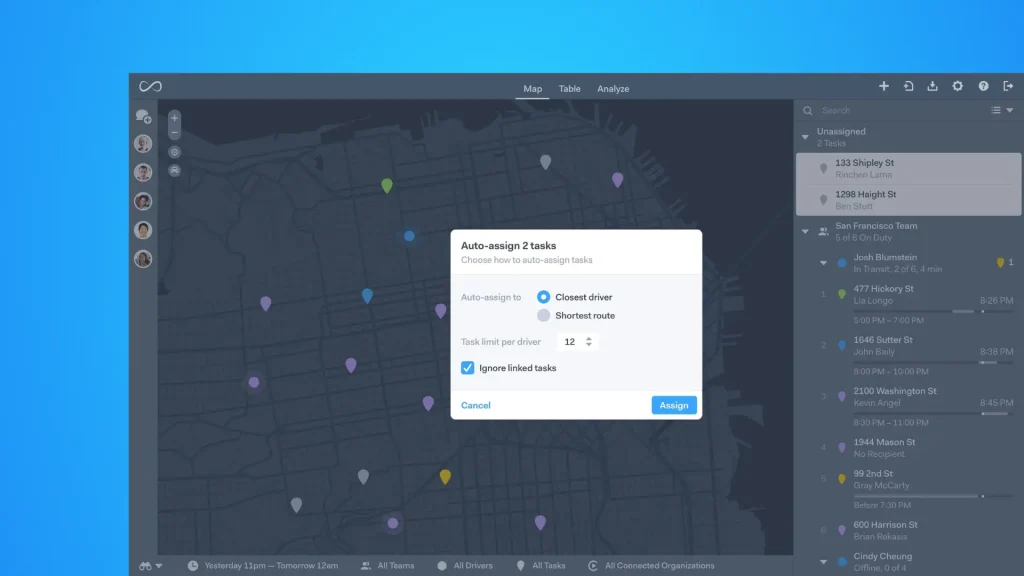
Onfleet is a dispatch-first platform with a polished driver app and strong customer communication built in. Where it stands out for fleets is the balance between dispatcher control and driver simplicity — the dispatch console gives real oversight without making the driver interface complicated.
Distinctive for fleet use:
task-based pricing rather than per-driver, which suits operations with variable headcount but steady volume. Automated customer notifications and branded tracking are included rather than sold as an add-on.
Limitation:
the task-based model means costs scale with delivery volume rather than fleet size, and per-task overage fees apply beyond the plan allowance. SMS charges are billed separately from the subscription, so the invoice regularly exceeds the headline plan price. Operations with high volume and few drivers can find it expensive relative to per-driver alternatives.
Pricing:
Launch $599/month (approximately 2,500 tasks), Scale $1,299/month, Enterprise $2,999/month.
3. OptimoRoute
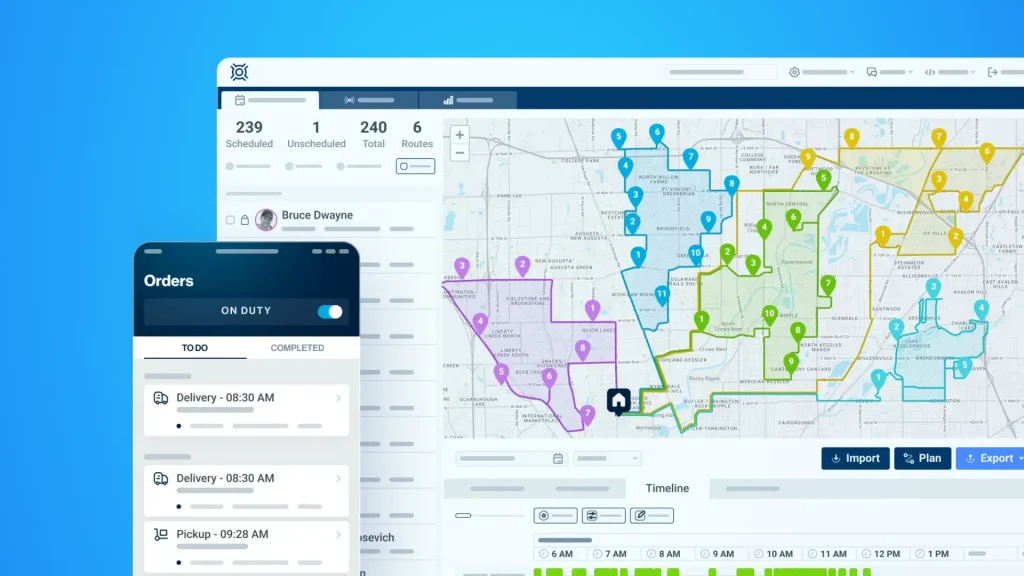
OptimoRoute is the strongest pure planning engine on this list, particularly for operations that plan across multiple days rather than one day at a time. Recurring routes, weekly schedules, and long-horizon capacity planning are handled natively rather than as workarounds.
Distinctive for fleet use:
multi-day and recurring route planning, which suits field service, scheduled B2B delivery, and any operation where the same stops repeat on a cycle.
Limitation:
the customer-facing layer is thinner than dispatch-first platforms. Branded tracking pages and two-way customer messaging are less developed, so operations where the end-customer experience is the differentiator may need to supplement it. The interface is planner-oriented and takes longer for dispatchers to learn than lighter tools.
Pricing:
approximately $39 per driver per month for the entry tier. (Verify against OptimoRoute’s current pricing page before publishing.)
2. WorkWave Route Manager
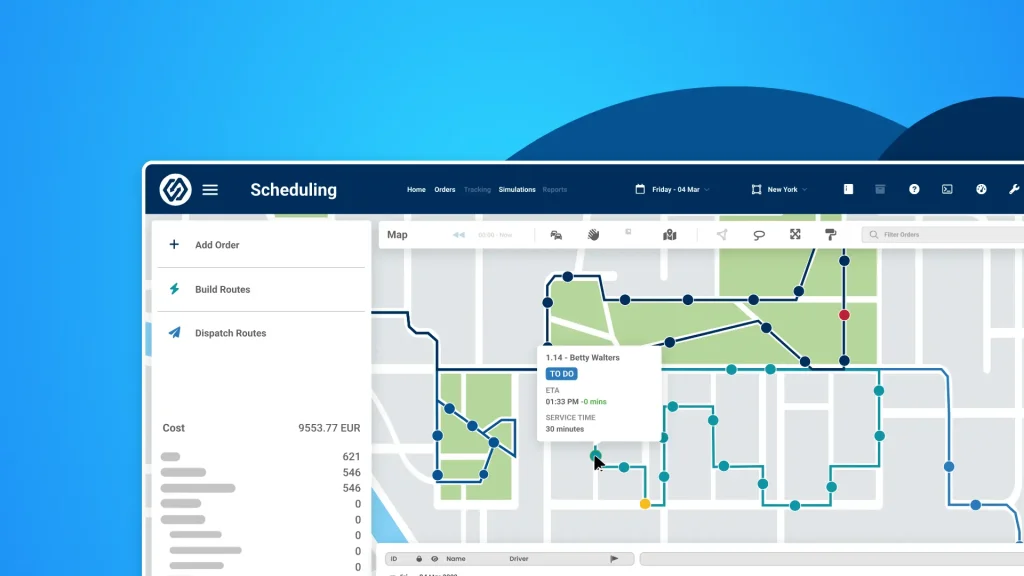
WorkWave Route Manager is built for operations moving from manual planning to automated dispatch for the first time. Its distinguishing feature is route simulation — planners can model a route change and see the consequence before committing drivers to it, which materially reduces the risk of a bad first month.
Distinctive for fleet use:
simulation before commitment, plus a mature field-service heritage that shows in how it handles recurring stops and technician-style scheduling.
Limitation:
pricing beyond the entry tier is quoted rather than published, which makes budgeting harder during evaluation. Reviewers consistently rate ease of setup lower than lighter competitors, and the interface carries the complexity of a longer-established product.
Pricing:
approximately $54/month for the entry tier. Higher tiers quoted directly.
1. Cigo Tracker
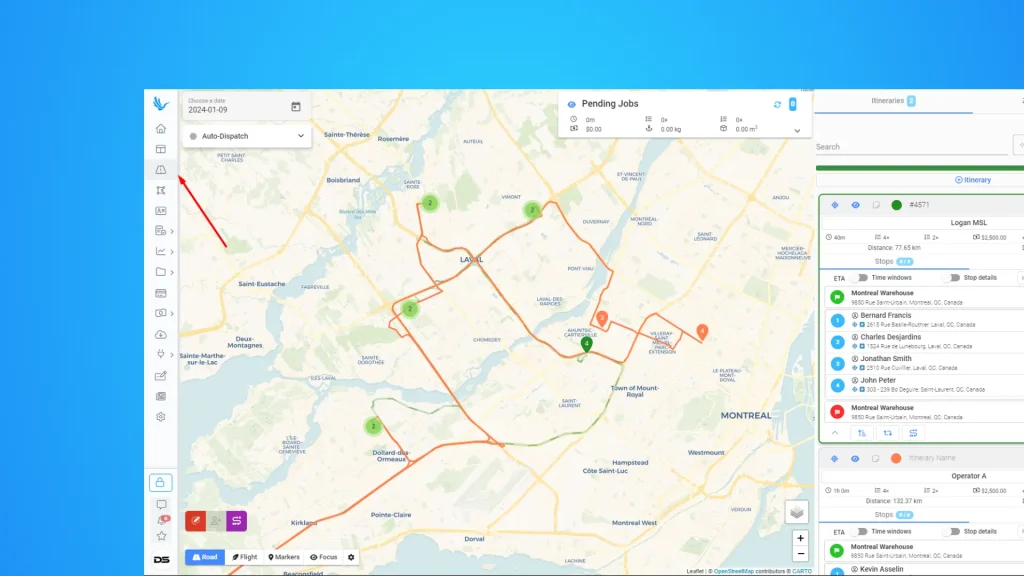
Cigo Tracker is built as a complete last-mile delivery workflow rather than a routing engine with features added around it. Every stop carries a single record from plan through execution to closeout, visible identically to dispatch, the driver, and the support agent taking the customer’s call. For fleets, that single-record design is the practical difference between a delivery day that reconciles cleanly and one that ends with three systems disagreeing about what happened.
Route optimization is constraint-based, handling time windows, per-stop service time, vehicle capacity, and driver skill rules before a route reaches a driver. Dispatch can insert, resequence, or reassign stops mid-route without losing the audit trail. Proof of delivery captures photos, signatures, GPS coordinates, and timestamps, with required fields configurable by stop type. Branded tracking pages and two-way SMS handle the customer side without additional headcount.
Distinctive for fleet use:
the unified stop record, plus published pricing in a category where most fleet-grade platforms quote by custom contract.
Limitation:
Cigo Tracker requires a structured onboarding process; it is not a plug-and-play tool for solo drivers. Address data cleanup, service-time calibration, and exception code setup happen before go-live, which means a deployment measured in weeks rather than an afternoon. Operations with a handful of drivers and simple routes will find lighter tools faster to adopt.
Pricing:
Starts at $290/month for the Starter plan. No per-stop fees. 14-day free trial.
Why Cigo Tracker Stands Out
Cigo Tracker handles multi-stop route planning at fleet scale, sequencing stops against real operational constraints rather than straight-line distance.
Advanced Route Optimization Software
Cigo Tracker’s route optimization is constraint-based rather than distance-based. Time windows, per-stop service time, vehicle capacity, and driver skill requirements all feed the optimization engine before a route is issued, so the plan a driver receives is one the day can actually accommodate. Routes scale with the operation rather than against a stop ceiling, which matters for fleets running high-density urban routes or multi-vehicle days.
Seamless Multi Stop Route Planning
Cigo Tracker excels in multi stop route planning. This allows businesses to plan routes with multiple stops efficiently. The feature ensures that delivery drivers follow the most optimized route. It improves delivery times and overall efficiency. It’s particularly beneficial for handling numerous deliveries in a single trip.
Proof of Delivery Enhancements
The proof of delivery feature in Cigo Tracker adds accountability and transparency. Delivery drivers can capture electronic signatures, photos, and notes upon delivery. This provides concrete proof of delivery completion. The feature enhances customer trust and helps resolve any delivery disputes.
User-Friendly Route Planner
Cigo Tracker offers a user-friendly interface that simplifies the process of planning routes. Delivery drivers can easily navigate the app. Meanwhile, fleet managers can monitor and adjust routes in real time. The intuitive design ensures that all users can utilize the app effectively.
Comprehensive Analytics and Reporting
Cigo Tracker provides detailed analytics and reporting features. These help businesses track delivery performance. You’ll get metrics such as delivery times, route efficiency, and driver performance. This allows businesses to make data-driven decisions. These insights are crucial for continuous improvement and optimizing delivery operations.
Implementing a Route Planner App
Implementing a route planner app involves several key steps. You’ll ensure efficient route optimization and improved delivery services.
- Start by selecting a suitable app, such as a free route planner app, and test its features through a trial period.
- Ensure the app includes route optimization software and supports multi stop route planning.
- Integrate the app with existing systems like Apple Maps for seamless operation.
- Train drivers on using the app to follow the most efficient routes and sequences.
- Utilize features like customer notifications to enhance customer experience. Businesses can achieve the most efficient route planning. They can do this by leveraging delivery route planning apps. This results in optimized delivery processes and improved overall performance.
Customizing Routes for Special Deliveries
Customizing delivery routes is essential for handling special delivery requirements. Use your route planner app to create specific routes for high-priority deliveries. It also helps with time-sensitive ones. You’ll get features like route optimization software and multi stop route planning.
This enables businesses to tailor routes to meet specific customer needs. Implementing customized routes ensures that drivers follow the most efficient sequences. This improves delivery services and customer satisfaction. Additionally, utilizing tools like Apple Maps can further enhance route customization. This provides accurate navigation for special deliveries.
Enhancing Customer Communication
Effective communication with customers is vital for a smooth delivery process. Delivery route planning apps often include features for sending customer notifications. These notifications provide real-time updates on:
- Delivery status
- Estimated arrival times
- Any changes to the delivery schedule
By keeping customers informed, businesses can enhance customer satisfaction. They can also reduce missed deliveries. Training drivers to use these communication tools ensures that customers receive instant and accurate ETAs. This fosters a positive delivery experience.
Evaluating App Performance
Regular evaluation of the delivery route planner app’s performance is critical. It helps monitor ongoing improvement. Utilize the app’s analytics to measure key performance indicators. These include delivery times, route efficiency, and driver performance. Compare the data against business goals to identify areas for improvement.
Features like GPS tracking and live driver tracking provide valuable insights into operations. Continuous evaluation helps in optimizing delivery routes. This ensures that the most efficient routes are always followed. So you’ll ultimately improve overall delivery services.
How to Evaluate a Delivery Route Planner App Before You Buy
Vendor demos are stagecraft. Every route planner looks capable in a controlled walkthrough using the vendor’s own sample data. These five steps surface what a demo will not.
- Test with your own worst day, not your average one. Load a demo with your actual stop data from the hardest week you had last quarter — the one with the volume spike, the two vehicles down, and the weather. Average-day performance tells you nothing, because average days do not break. Ask specifically how the optimizer handled the constraints that made that day difficult.
- Confirm which constraints are native and which are workarounds. Time windows, per-stop service time, vehicle capacity, driver skills, and break requirements should be first-class inputs to the optimization engine, not fields you fill in and hope get respected. Ask the vendor to show you a route where a constraint forced a suboptimal sequence. If they cannot produce one, the constraint may be cosmetic.
- Put the driver app in a driver’s hands, not a manager’s. Driver adoption determines data quality, and data quality determines whether any of the analytics mean anything. Have two actual drivers run live routes on it for a week. Watch for how many taps it takes to close a stop, whether the screen is readable in direct sunlight, and what happens when signal drops in a basement loading dock.
- Price it at twice your current volume. Pricing models differ in ways that only matter at scale — per-driver, per-stop, per-task, and flat-tier all look similar at your current size and diverge sharply as you grow. Ask for the quote at double your volume before you sign at your current one.
- Ask what the implementation actually involves. Address data cleanup, service-time calibration, and exception code setup are where most rollouts lose weeks. A vendor who answers this question specifically is describing a process they have run before. A vendor who says setup takes an afternoon is describing a product you will outgrow.
Future Trends in Delivery Route Planning
The future of delivery route planning is set to be transformed by advancements in technology and data analytics. Emerging route planners will leverage AI and machine learning. These will generate routes in the most efficient sequence. It ensures delivery drivers follow the best paths.
The integration of real-time data will allow for dynamic adjustments. This optimizes multi-stop route planners to create the most efficient sequence for each route. Enhanced proof of delivery features will become standard. This includes digital signatures and photos. These provide robust verification and improve customer trust. These trends will significantly enhance the efficiency and reliability of delivery services.
AI and Machine Learning in Route Planning
sequencing to continuous re-optimization. The clearest large-scale evidence comes from UPS, whose ORION routing system is reported to save around 100 million delivery miles and approximately 10 million gallons of fuel annually — a demonstration that algorithmic routing produces cost and emissions effects at a scale manual planning cannot approach.
A 2025 study in Sensors on AI-driven last-mile fleet optimisation demonstrates the mechanism at the route level: AI decision-making combined with real-time data from urban sensor networks enables systems to dynamically reorder delivery stops mid-route in response to live conditions.
The direction of travel is from explanation to prevention. Systems that surface delay risk at 9am, while dispatch still has options, cost far less than systems that explain at 3pm why a route failed. For fleet operators evaluating apps today, the question worth asking a vendor is not whether they use AI but what the model actually predicts and what action it triggers.
Integration with Autonomous Vehicles
Autonomous delivery is moving from pilot to early deployment, though the market remains small relative to the noise around it. Market sizing varies considerably across analysts — estimates for the autonomous last-mile market in 2025 range from roughly USD 1.3 billion to figures an order of magnitude higher depending on how the category is defined — but growth rates cluster consistently around 20 to 24 percent CAGR across sources.
What matters operationally is less the vehicles than the dispatch layer above them. Ground delivery robots, drones, and autonomous vans each carry different constraints on range, payload, and weather tolerance, and an operation running any of them alongside human drivers needs one dispatch view rather than parallel systems. Platforms that can route across owned, contracted, and autonomous capacity from a single interface will absorb this shift without tool sprawl; platforms that cannot will require a second system.
For most fleets, the practical horizon is hybrid rather than autonomous — a small share of suitable routes handled autonomously while the majority stay with drivers.
Real-Time Data and Predictive Analytics
Predictive analytics shifts the planning question from what happened to what is about to happen. Traffic, weather, and historical stop-duration data feed models that flag which routes are likely to run behind before they do, and which stops are likely to fail on first attempt.
Reported operational effects are meaningful where deployed: companies implementing predictive analytics have reported fleet utilisation improvements around 30 percent and downtime reduction near 18 percent, and one AI-driven route optimisation platform launched in 2025 reported delivery time improvements of 28 percent.
The prerequisite is data quality. Predictive models trained on inaccurate service times or incomplete stop records produce confident predictions that are wrong, which is worse than no prediction at all. Operations considering predictive features should first confirm their existing stop data is clean enough to train on.
Summary of Key Points
Implementing a delivery route planner app is essential. It optimizes delivery operations and boosts efficiency. The right app has advanced route optimization software, multi-stop planning, and proof of delivery features. Benefits include faster deliveries, lower fuel costs, and happier customers. a formulation that does not pair the #1 and #5 entries as equivalents. They offer real-time tracking and handle unlimited stops. Training, system integration, and ongoing monitoring are key to success.
Route planner apps also provide long-term value. Analytics reveal trends in delivery performance, driver productivity, and fuel use. These insights enable data-driven decisions. Managers can refine operations and anticipate challenges. Features like customer notifications, instant ETAs, and proof of delivery improve communication and accountability. This strengthens brand reputation and encourages repeat business.
Scalability is another major advantage. Small local fleets or large logistics operations can grow with these tools. Mobile access and platform integration keep businesses competitive. Delivery route planner apps prepare companies for the demands of modern logistics.
FAQs
What is the main benefit of using a delivery route planner app?
The primary benefit is efficiency. Route planner apps help businesses:
- Reduce fuel costs
- Shorten delivery times
- Increase overall productivity
They do this by automatically generating the most optimized routes for drivers.
Are delivery route planner apps suitable for small businesses?
Yes. Many route planner apps offer free versions or trials that are ideal for small businesses with fewer deliveries. These apps can then scale as the business grows.
Can these apps integrate with other tools like CRM or mapping platforms?
Most modern route planner apps integrate seamlessly with popular tools like:
- Apple Maps
- Google Maps
- CRM systems
This ensures smooth workflows, real-time updates, and improved customer communication.
How do delivery route planner apps improve customer satisfaction?
These apps keep customers informed and reduce delivery disputes. They do so by providing accurate ETAs, real-time updates, and proof of delivery features, Improved transparency translates into higher customer trust and satisfaction.
How much does a delivery route planner app cost?
Pricing ranges widely by model. Solo-driver apps start free or around $10 to $20 per month with stop limits. Per-driver fleet tools generally run $39 to $60 per driver per month. Task-based platforms start near $599 per month for a few thousand deliveries, with overage fees beyond the allowance. Flat-tier fleet platforms such as Cigo Tracker start at $290 per month with no per-stop fees. The variable that matters most is which model matches your growth pattern: per-stop and per-task pricing scale with volume, while per-driver and flat-tier pricing scale with headcount.


